Spanish
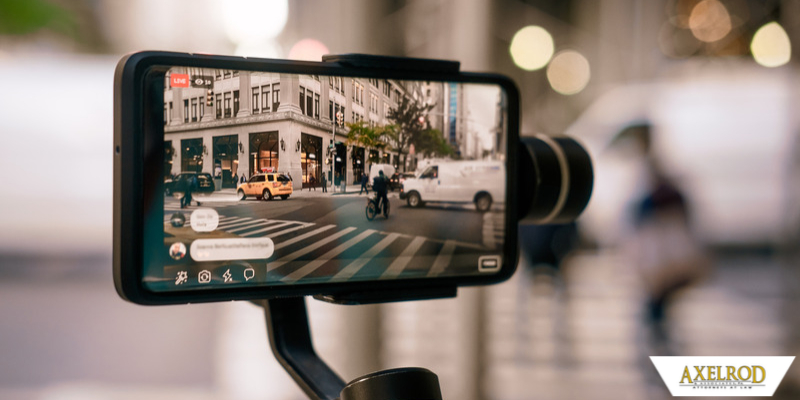

Pulling out your phone on a public street shouldn’t put you at risk of arrest. When an officer or a letter from the town tells you to stop filming or face charges, it’s frightening, and it’s hard to know whether the threat is real.
Recording in public is legal in South Carolina. The First Amendment protects filming what you can see from a public place, including police officers doing their jobs, and state law lets you record audio of any conversation you’re part of. Officers can set narrow limits for safety, but they can’t stop you because they or your neighbors don’t like what you’re documenting. When an official punishes you for recording anyway, the dispute becomes a civil rights claim, and a dedicated Myrtle Beach civil rights lawyer can bring it in federal court.
Axelrod & Associates, P.A. is fighting this issue in federal court on behalf of a Surfside Beach resident. Our attorneys can tell you where your own rights stand and what to do if you’ve already been warned.
Key Takeaways
- Filming in a public place is protected by the First Amendment, and that includes recording police officers and public employees at work.
- South Carolina is a one-party consent state, so you can record a conversation you’re part of without telling the other person.
- The federal appeals court covering South Carolina has said recording police encounters contributes to public discussion of government affairs.
- A threat of harassment charges for filming in public can itself become the basis of a civil rights lawsuit.
- Officers can give reasonable safety orders, so keep your distance and keep recording without interfering.
Axelrod & Associates offers free consultations to anyone who was threatened, cited or arrested for recording in public.
Is It Legal to Record in Public in South Carolina?
Yes. You can photograph and film anything plainly visible from a public sidewalk, street or park, and courts treat that recording as expression the First Amendment protects.
The real limit is privacy. You can’t film through the window of someone’s home or record in places where people expect privacy, like restrooms and changing rooms. Out on a public street, nobody has a reasonable expectation of privacy in what they do in plain view, and that covers your neighbors, town officials and police officers alike. Audio is where the rules get more specific.
South Carolina’s Rules for Recording Audio
South Carolina is a one-party consent state, so under the state wiretap law, audio recording turns on whether you or someone else in the conversation agreed to it:
- You can record a conversation you’re part of without telling anyone else, under S.C. Code § 17-30-30.
- You can’t secretly record a private conversation between other people when none of them has agreed.
- Words spoken out loud in public, where no one expects privacy, generally fall outside the law’s protection for private conversations.
Breaking the wiretap rules is a separate crime, so if you aren’t sure a conversation was public, talk to a lawyer before you post the recording.
Can You Record the Police in South Carolina?
You can record police officers doing their jobs in public, and the federal appeals court that covers South Carolina has recognized why that matters.
What the Fourth Circuit said
In February 2023, the U.S. Court of Appeals for the Fourth Circuit, which hears federal appeals from South Carolina and four neighboring states, decided Sharpe v. Winterville Police Department. The court held that livestreaming a traffic stop is generally protected expression and wrote that “recording police encounters creates information that contributes to discussion about governmental affairs.” It also left room for narrow limits backed by a strong enough safety interest.
Where officers can draw the line
Officers can tell you to step back from an active scene, stay out of the road or stop interfering with an arrest. They can’t order you to stop recording or delete footage just because they’d rather not be filmed. Follow a lawful order to move, keep the camera rolling, and back the video up somewhere outside your phone as soon as you can.
Case Spotlight: The Surfside Beach First Amendment Lawsuit
In April 2026, our firm filed a federal lawsuit against the Town of Surfside Beach on behalf of a resident known as the Goose Whisperer, who films the Canada geese that gather in her neighborhood.
On April 3, she was walking on a public street and recording the geese when a neighbor complained. Three days later, police delivered a letter warning that she could face criminal harassment charges if she kept recording there, The Post and Courier reported. At the time, the town council was weighing tougher penalties for feeding geese, including jail for repeat offenders.
Attorneys Tristan Shaffer and Stuart Axelrod filed suit on April 16, alleging the threat violated her First Amendment rights. “The police cannot prevent you from going to a public place and pursuing things that are essentially critical of local government,” Shaffer told My Horry News. The case is pending, and the court hasn’t ruled.
If you were warned, cited or arrested over something you recorded in public, Axelrod & Associates can review what happened with you in a free consultation.
Suing After You’re Punished for Recording
When a government official arrests, threatens or retaliates against you for protected recording, you may be able to sue under 42 U.S.C. § 1983, the federal civil rights law that lets people hold state and local officials accountable for violating constitutional rights. These claims can seek money damages, a court order stopping the conduct, or both, and the Surfside Beach suit asks the court to stop police from threatening arrest. Officers often raise qualified immunity as a defense, as the officers in the Sharpe case did successfully, so a South Carolina First Amendment attorney has to show the right was clearly established when the officer acted.
Why a Harassment Threat Doesn’t Change Your Rights
South Carolina’s harassment law, S.C. Code § 16-3-1700, targets a pattern of intentional, substantial and unreasonable intrusion into someone’s private life that serves no legitimate purpose. Filming geese on a public street, or an officer at a traffic stop, is hard to fit into that definition, and the law excludes conduct the Constitution protects. A warning letter isn’t a charge. Keep it and show it to a South Carolina First Amendment attorney before you respond.
Axelrod & Associates handles First Amendment and civil rights claims across Myrtle Beach, Surfside Beach and the Grand Strand, and a free consultation is the quickest way to find out whether your claim is worth pursuing.
Frequently Asked Questions
Can a business owner stop me from recording on their property?
Yes. The First Amendment limits what the government can do, not what a private property owner can ask of you. If an owner or manager tells you to stop filming or leave and you refuse, you could face a trespassing charge, so step back onto the public sidewalk and keep recording from there.
Can police take my phone if I’m recording?
They generally can’t search it without a warrant. The U.S. Supreme Court held in Riley v. California in 2014 that police usually need a warrant to search a cell phone. Don’t unlock it or hand over your passcode, and tell your lawyer right away if an officer took it.
Can I record a public meeting in South Carolina?
Yes, you can. South Carolina’s open-meetings law lets anyone attending a public meeting record it, whether it’s a town council session or a county board vote. If an official tries to stop you, note the time and who said it, since that refusal may break state law.
How long do I have to sue after police threatened me for recording?
Usually three years for a federal civil rights claim. Federal courts in South Carolina borrow the state’s three-year deadline for personal injury cases, but state-law claims against a town can carry a shorter two-year limit. Talk to a lawyer well before either date.
Axelrod & Associates, P.A.: Your Myrtle Beach Civil Rights Law Firm
A warning from police for filming on a public street can make you second-guess every time you raise your phone, and that hesitation is what the First Amendment is meant to prevent. In our Surfside Beach case, the threat itself became the foundation of the lawsuit, which is why we tell people to keep every letter, citation and clip, even the ones that seem minor. We look at what you recorded, where you were standing and what officials did next (the order of events matters more than people expect), and we decide with you whether a defense, a lawsuit or both makes sense. Contact our firm today and tell us what happened.